
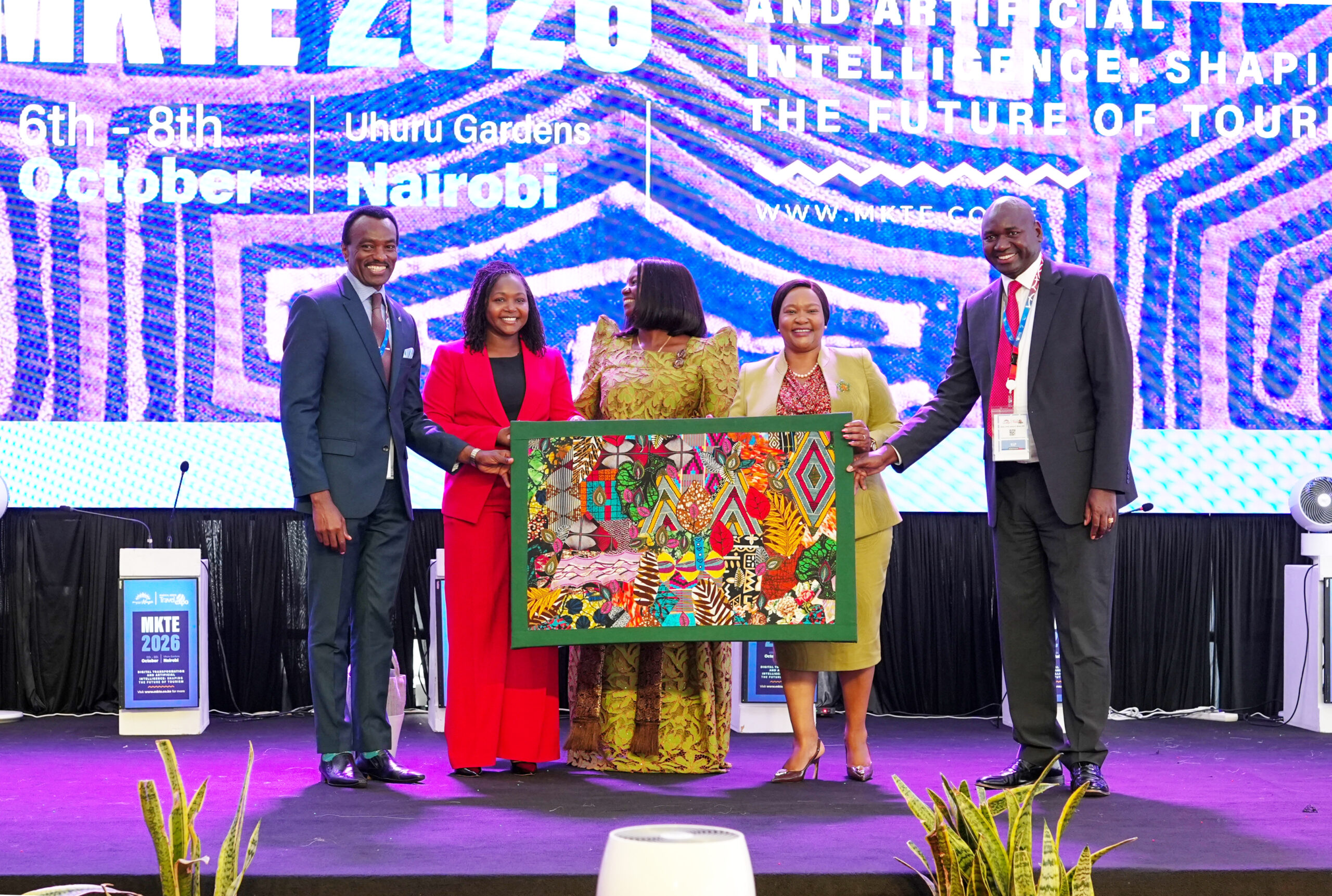
The chairs are stacked. The exhibitor stands have come down.
MKTE 2026 is over. But the numbers it leaves behind are worth sitting with not because they are impressive on a slide, but because they represent something real: deals in progress, relationships formed, and a pipeline of business that will show up in Kenya’s tourism earnings over the next twelve to eighteen months.
|
10,000+ Delegates from 40+ countries |
450 Exhibitors from 18 countries |
250+ Vetted hosted buyers |
10,008+ B2B meetings booked |
|
31 Fam trip itineraries, 8 circuits |
36,667 Total delegates since 2011 |
KES 25–35B Projected trade pipeline |
16th And final edition at Uhuru Gardens |
What This Edition Was
The 16th Magical Kenya Travel Expo was the largest in the event’s fifteen-year history. More exhibitors. More buyers. The first-ever dedicated Creator Summit. A conference programme that ran across all three days and asked the sector genuinely difficult questions about data governance, AI, digital inclusion, community benefit, and what it means for Africa to market itself as a single destination rather than forty competing ones.
It was also the final edition at Uhuru Gardens, and that fact threaded through everything. The venue has hosted 36,667 delegates since 2011. There is something about knowing that a space has reached the end of its season as a gathering place that makes people show up more fully. The conversations ran longer. The cocktail evenings stretched later. The cultural performers at the opening ceremony pulled delegates onto the floor and the room loved every second of it.
| We are back bolder and with a clearer vision. Beyond simply displaying tourism products, we are gathered here to shape the future of tourism itself. — Hon. Rebecca Miano EGH, Cabinet Secretary for Tourism and Wildlife |
The Numbers Behind the Three Days
Kenya came into MKTE 2026 on strong ground: 2.7 million international visitors in 2025, up 9% on the prior year. KES 500 billion in tourism earnings. Domestic travel at a record 5.2 million bed nights. Africa’s tourism sector growing at 9% against a global average of 4%.
The expo extended that momentum into tangible trade activity. 450 exhibitors from 18 countries filled the floor at Uhuru Gardens tourism boards from Uganda, Rwanda, Malawi, South Africa, Zambia and Barbados, county governments from nine of Kenya’s counties, and 41 MSMEs alongside the headline operators. 250 vetted international buyers from Africa, Asia, the Americas and Europe held 10,008 pre-scheduled B2B meetings across the three days.
The pipeline from those meetings is estimated at KES 25 to 35 billion in trade contracts within twelve to eighteen months. That is the number that matters most. The expo is not the destination. It is the mechanism. Those contracts are the destination.
| The pipeline from MKTE 2026 is estimated at KES 25 to 35 billion in trade contracts within twelve to eighteen months. The expo is the mechanism. The contracts are the destination. |
What the Conversations Were About
The seminar programme covered four tracks across the three days: data governance and AI, digital transformation along the traveller’s journey, tourism preparedness and resilience, and the creative and entertainment economy as a growth engine. Each reflected a sector ready to have a serious conversation about its own future.
The AI and data session asked who benefits from the intelligence Kenya’s tourism sector is generating, and whether the infrastructure being built serves the whole value chain or only the platforms at the top of it. The KTB announced a roadmap for an AI Command Centre that will use real-time data to support operators with live market intelligence.
The resilience session examined what Kenya needs to put in place before the next crisis arrives: a travel insurance market that works for operators and visitors, a health security framework that extends beyond Nairobi into the field, and a crisis management architecture that does not depend on individual operators to survive what it was never designed to handle.
The Creator Summit on Day 3 brought together voices from film, music, sports, and the creator economy with the tourism trade for the first time at this level, at this platform. The argument was simple: Kenya’s creative sector is generating global attention for the destination. The tourism sector needs to stop watching that happen and start building the structures to convert it into bookings.
The Regional Conversation
One of the standout moments of the opening ceremony was the address by Uganda’s State Minister for Tourism, Wildlife and Antiquities, Hon. Susan Nakawuki Nsambu, attending her first MKTE. Her message was direct: Uganda and Kenya are not competitors. Neither are any of the 40-plus nations that showed up this week. Africa grows faster when it markets itself as a single destination rather than a collection of rivals fighting for the same traveller.
She called for the removal of non-tariff barriers, improved intra-African connectivity, and a coordinated regional tourism strategy. South African Tourism was on the floor with a delegation and hosted a networking dinner for 100 travel-trade and MICE stakeholders. Tourism boards from six countries were exhibiting. The geography of who showed up said something clear about where this conversation is heading.
| Uganda and Kenya are not competitors. We are permanent partners. True growth comes when we market Africa as one — because we are one. — Hon. Susan Nakawuki Nsambu, Uganda State Minister for Tourism |
The Fam Trips: Where the Deal Becomes the Destination
31 itineraries. 8 destination circuits. Running October 9 to 13. This is the part of MKTE that does not show up in the headline numbers but is arguably the most commercially important activity of the entire week.
A buyer who has seen the Maasai Mara, stayed on the coast, experienced a community conservancy in Laikipia, or walked through Hell’s Gate does not just understand the product intellectually. They sell it differently. They present it with conviction. The itineraries this year took buyers through Nairobi’s urban experiences, the Central Highlands and Mount Kenya, the Swahili coast at Lamu and Mombasa, southern Kenya, the Mara, the Rift Valley, and northern Kenya’s desert landscapes.
Every one of those journeys is a future itinerary in a European, American, Asian or African travel brochure. That is what fam trips are for.
What Comes Next
The target is 5.5 million international visitors by 2028 and KES 1 trillion in tourism earnings. Kenya welcomed 2.7 million in 2025. The distance between those two numbers is not a marketing problem alone. It is an infrastructure problem, a digital discovery problem, a community benefit problem, and a regional collaboration problem. MKTE 2026 held a serious conversation about all four.
PS Julius Bitok’s observation is worth carrying forward: next year Kenya hosts AFCON, with an expected one million attendees. Does the country have the capacity and infrastructure to deliver a world-class experience at that scale? The work starts now.
And somewhere in a hotel in Amsterdam, a travel agency in São Paulo, or a DMC in Dubai, a buyer who spent three days at Uhuru Gardens this week is writing up notes from their B2B meetings and thinking about what goes into their Kenya product portfolio for 2027. That is what MKTE does. That is what it has done sixteen times.
See you at the next chapter.
| The ambition is clear. KES 1 trillion and 5.5 million visitors by 2028. MKTE 2026 just gave that ambition its best platform yet. |
|
MKTE 2026 — THANK YOU FOR BEING PART OF IT Fam trips running October 9–13 · 31 itineraries · 8 destination circuits Full event recap and session highlights: www.mkte.co.ke #MKTE2026 · #MagicalKenya · #AfricasConnectionHub · #KenyaTourism · #DestinationKenya |